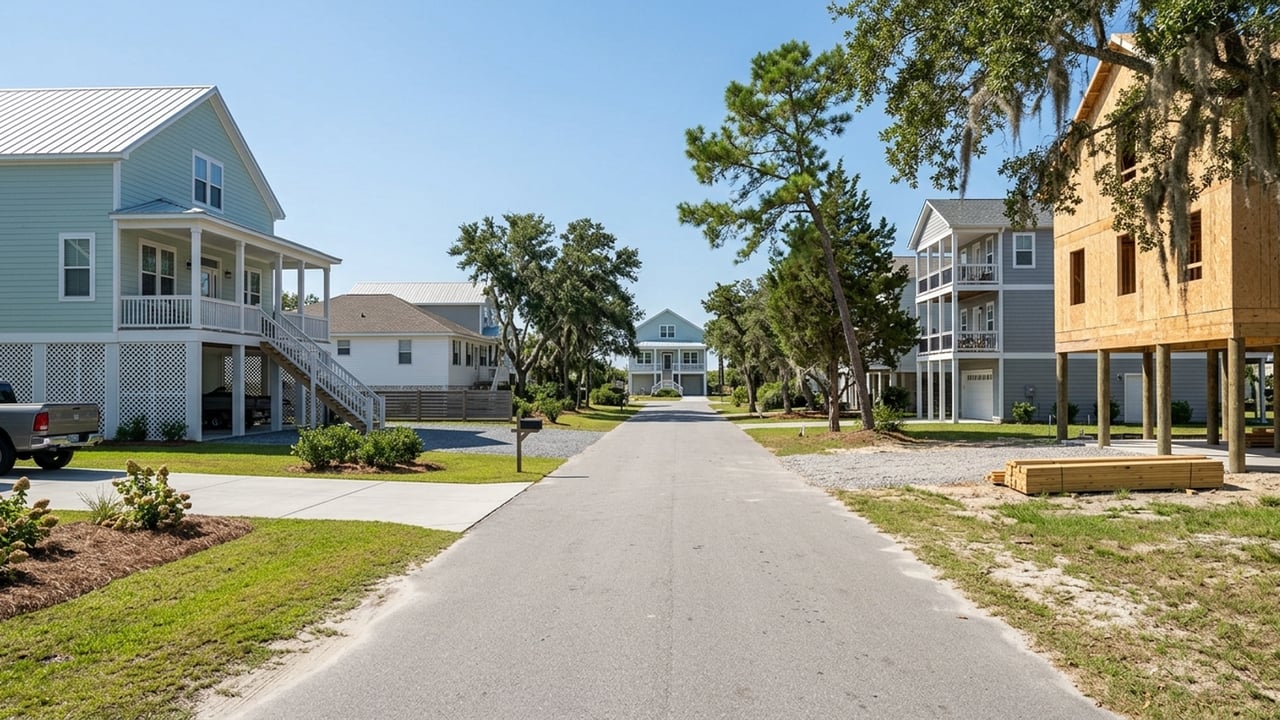
What to Expect When You Build Your Own Home in Oak Island, NC
Marc Stollings October 9, 2026
Marc Stollings October 9, 2026
The median home price in the Oak Island, NC housing market sits around $609,000 right now. And with roughly 294 homes in existing inventory, there's a decent chance you'll tour everything available and still not find exactly what you had in mind for coastal living.
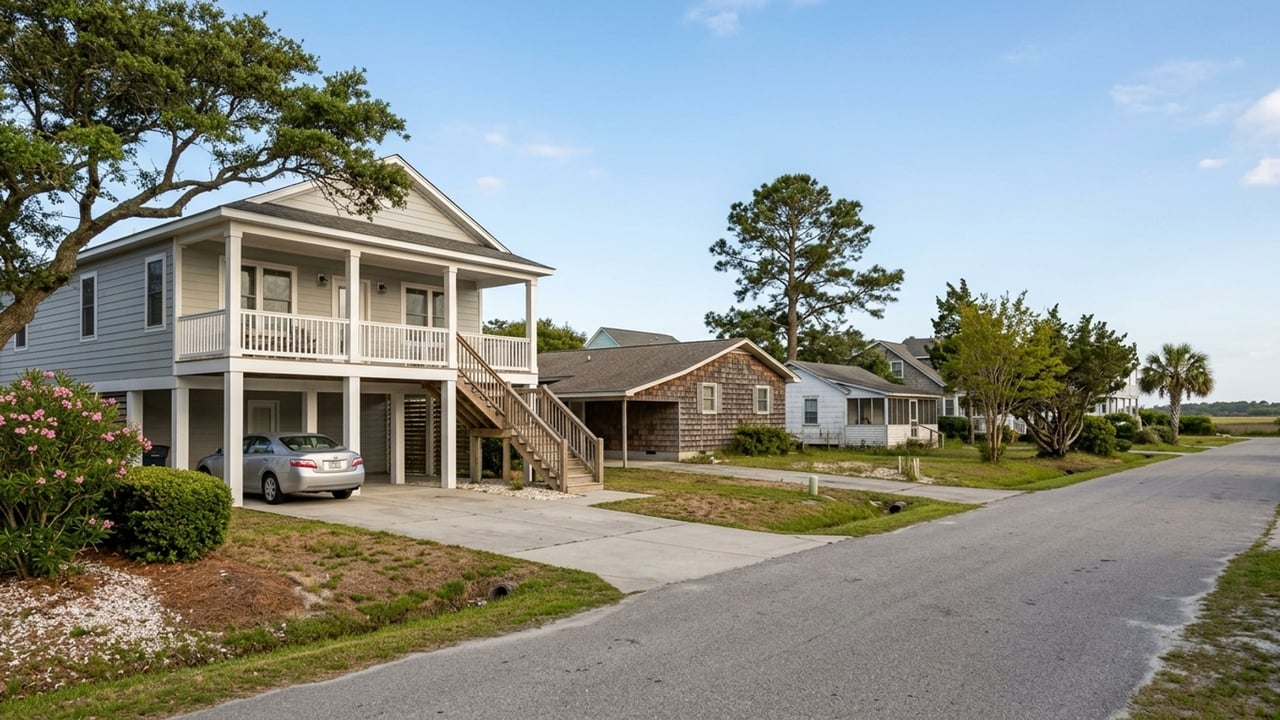
Building gives you control over the floor plan, the elevation, the finishes - all of it. It also means dealing with coastal construction requirements that don't apply anywhere else: piling foundations, Brunswick County regulations, CAMA permits. None of that is a dealbreaker, but you should know what you're walking into before you start sketching floor plans.
A 2,200-square-foot home in Oak Island typically costs between $506,000 and $627,000 to build. That covers vertical construction - the house itself - assuming standard to upgraded finishes appropriate for a coastal environment.
What it doesn't cover is the lot. Land prices here vary considerably depending on how close you are to the water, so your all-in number will look different from someone building a few miles inland.
Statewide, building a house in North Carolina runs anywhere from $350,000 to $600,000, with a per-square-foot average roughly between $135 and $250 depending on region and finish level.
Oak Island lands toward the top of that range. Elevated structures, wind-resistant materials, and the specialized labor pool in the Brunswick County area all push costs higher than what you'd pay in a standard inland market.
Custom homes in Oak Island generally run between $205 and $475 or more per square foot. Most standard custom builds settle into a tighter band - call it $230 to $285 per heated square foot.
That per-square-foot figure only applies to heated, finished living space. Ground-level storage, exterior decking, lower-level parking - those still cost real money to build. They just don't factor into the heated square footage calculation.
Your total project cost is land plus vertical build. Here's a simple illustration: an inland lot at $60,000 combined with a 2,000-square-foot home at $250 per square foot gets you to a $560,000 baseline before site prep or utility connections.
That baseline can shift. Material prices move during construction, site conditions surprise everyone occasionally, and utility hookups aren't free. Keep a contingency fund of 10 to 15 percent in reserve. You may not need all of it, but you'll be glad it's there.
Square footage drives the final price more than almost anything else. Smaller homes require fewer materials and less labor - but they still carry the same fixed costs for permits, utility hookups, and basic site prep that a larger home does.
Scale up the footprint and the per-square-foot rate sometimes ticks down slightly, because those fixed costs spread across more area. Your total out-of-pocket, though, will always go up with size.
A 1,200 to 1,500-square-foot cottage is an accessible entry point. At $250 per square foot, a 1,500-square-foot build runs roughly $375,000 - excluding the lot.
Homes in the 2,000 to 2,500-square-foot range represent the most common target for custom builds around here. They typically run $500,000 to over $600,000 to construct and give you enough room for multiple bedrooms plus real outdoor living space.
Cross the 3,000-square-foot threshold and you're often looking at well past $750,000 for the vertical construction alone. At that scale, buyers are usually incorporating premium finishes, elevators, and expansive wrap-around porches.
The foundation costs climb too, because a larger home means a larger piling footprint. And the timeline stretches considerably compared to a mid-size build - plan accordingly.
It helps to match your available capital to what the Brunswick County construction market delivers before you get too attached to a particular vision. These budget tiers assume you're paying for both the land and the construction together. If you already own your lot, your money goes much further toward the structure and finishes.
A total budget under $300,000 is a tight spot for new custom construction in Oak Island today. With inland lots starting around $50,000, you'd have roughly $250,000 left for the build - which covers about 1,000 square feet at current local rates.
Buyers working within this range should seriously consider an existing older home or explore modular options. Traditional stick-built construction with coastal pilings rarely fits within this budget tier.
At $500,000, you're in realistic territory - as long as you choose an affordable inland lot. That leaves room for a comfortable 1,500 to 1,800-square-foot home with standard finishes.
Push the budget to $700,000 or $800,000 and your options expand: premium lots closer to the water, a larger 2,500-square-foot footprint, upgraded materials, metal roofing, and the kind of outdoor living spaces that make sense on a barrier island.
There are dozens of line items in a custom build, but a handful of categories account for most of the money. On a barrier island, site preparation and structural engineering take up a larger slice of the budget than they would in a standard inland subdivision - that's just the nature of the environment.
Lot prices in Oak Island move around a lot depending on proximity to the ocean and the Intracoastal Waterway. Inland lots typically start around $50,000. Beach lots regularly command $200,000 to $300,000. Direct water access can push past $500,000 for the land alone.
Once you've closed on the lot, you're still paying for clearing, grading, and utility connections before a single board goes up.
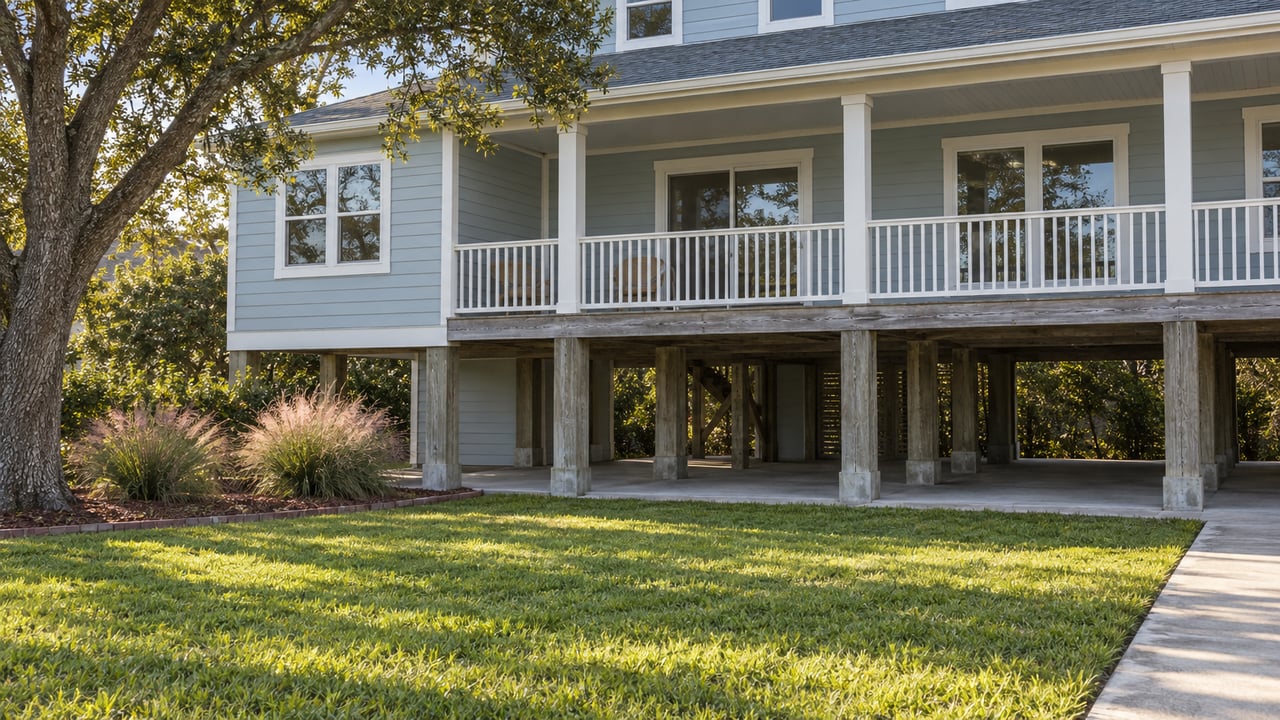
The piling foundation is a given for elevated coastal construction, and it's a serious line item - typically between $40,000 and $100,000 or more depending on lot conditions and required elevation.
Framing is the next major cost. Wind-resistant techniques and materials aren't optional here, and the specialized labor required to frame a multi-story elevated home adds up quickly. Lumber costs don't help.
Brunswick County calculates its fees based on square footage and ICC chart values - for example, $100 for accessory buildings up to 400 square feet. The town of Oak Island issues its own building permits, which typically run $200 to $550. Some fees are calculated against the home's valuation using a baseline like $150 per square foot for heated space.
Verify the current fee schedule directly with the local building department during your planning phase. These numbers can change.
The median sale price for an existing home in Oak Island is around $609,000. Homes typically spend about 87 days on the market, which gives you a reasonable window to look around.
When you compare that $609,000 median to the cost of purchasing a lot and building a $500,000 structure, building is usually the more expensive route. What you get for the premium is a home built to current hurricane codes, modern energy efficiency, and no immediate maintenance backlog.
If you need to be in the house within the next few months, buying an existing home is almost certainly the right call. Custom coastal construction can easily take a year or more from initial design to a final certificate of occupancy.
Buying also locks in your price. With a custom build, material costs can move during the project, and that financial uncertainty sits with you until the day you close out the construction loan.
The process starts with financing and a lot. Construction loans work differently than standard mortgages - they typically pay out in draws as your builder completes specific phases of the project, not as a lump sum at closing.
Once you own the land, you'll work with an architect or designer to produce plans that meet local zoning requirements. Those plans go through review before anyone breaks ground.
Your project has to satisfy both Brunswick County regulations and Oak Island town ordinances. Coastal builds also require CAMA (Coastal Area Management Act) permits to ensure the structure doesn't negatively impact the local environment.
Permitting can take several weeks or several months, depending on the complexity of your site and the current backlog at the building department. Don't schedule anything around an optimistic permit timeline.
Hire a general contractor who has built on barrier islands specifically - not just near the coast. Coastal construction requires working knowledge of piling depths, wind shear requirements, and moisture control that goes beyond standard residential experience.
When you're vetting builders, ask to walk through a home they're currently framing, not just a finished model. That's where you see whether the structural work is solid, before the drywall covers everything up.
Building a typical 2,200-square-foot home in Oak Island costs between $506,000 and $627,000. That estimate covers the structure itself and doesn't include the price of the land.
A budget of $200,000 or $300,000 generally won't cover both a lot and new coastal construction. A budget of $500,000 is feasible if you purchase an inexpensive inland lot and keep the footprint smaller.
Buying is usually cheaper. The median sale price for an existing home is around $609,000, while purchasing a lot and building a custom home often exceeds that total.
Yes - North Carolina allows individuals to act as their own general contractor to build their primary residence. You still have to pull all required permits and pass all local Brunswick County inspections.
Aside from the land, framing and the piling foundation are the biggest costs. The piling foundation alone typically runs between $40,000 and $100,000.
Plan on a year or more from initial design to a final certificate of occupancy. Securing CAMA permits and completing specialized piling work adds time compared to a standard inland build.
Stay up to date on the latest real estate trends.

With 39 closed transactions and a deep understanding of coastal investment properties, Marc Stollings provides fact-based guidance as the best real estate agent in Oak… Read more
Partner with a trusted local expert to navigate the Oak Island real estate market with confidence, personalized service, and proven results.