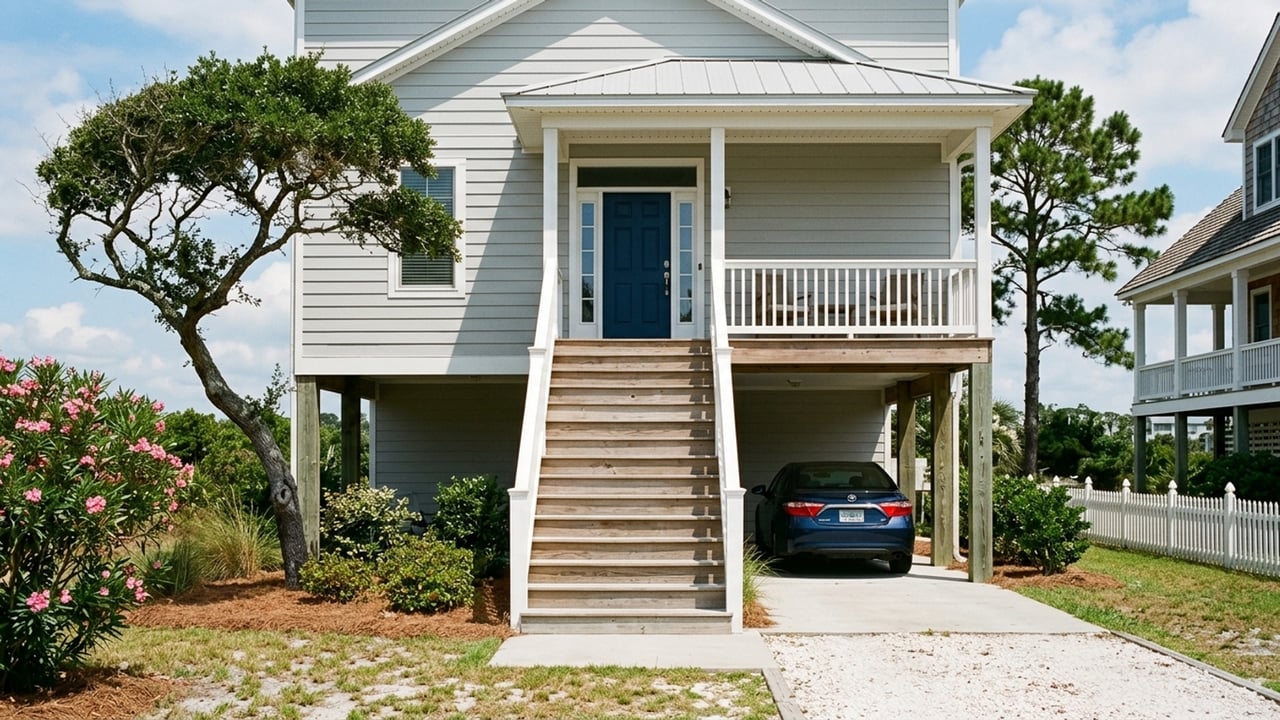
What to Expect from HOA Fees in Oak Island, NC
Marc Stollings October 9, 2026
Marc Stollings October 9, 2026
The median sale price in the Oak Island, NC housing market is currently around $609,000. If you're among the buyers looking at the roughly 294 available properties on the market right now, you'll notice that many listings come with a mandatory homeowners association. Homes here are spending roughly 87 days on the market, so you do have time to dig into the details before you commit.
These associations maintain common areas, manage shared amenities, and enforce neighborhood rules. Before you make an offer on anything coastal, HOA dues need to be a real line item in your monthly budget - not an afterthought.
Homeowners association fees for the Oak Island and Southport area typically range from about $60 to $700 per month. That's a wide band, and the spread comes down to community type and what amenities you're getting.
Buyers looking at single-family subdivisions will generally see lower costs than those eyeing beachfront complexes. Knowing where your target properties fall in that range is the first step toward a budget that holds up.
Most standard residential neighborhoods in Oak Island sit on the lower to middle end of that $60 to $700 monthly range. These communities tend to cover basic shared infrastructure - entrance landscaping, community signs, that sort of thing.
Oceanfront condo buildings are a different story. A property like Oak Island Beach Villas runs roughly $510 to $975 per month. That's not a typo - maintaining large shared structures in a marine environment is genuinely expensive, and the dues reflect it.
Oak Island sits within the Wilmington, NC Metropolitan Statistical Area, where coastal property maintenance shapes community budgets in ways that inland markets simply don't deal with. Statewide, North Carolina HOA averages hover around $200 to $300 per month.
Oak Island's upper-end fees blow past those statewide numbers without much effort. Wind, salt, and flood insurance burdens are realities here that an inland association in Raleigh or Greensboro never has to price into their budget.
The number and quality of shared amenities dictate the bulk of any association's operating costs. Large swimming pools, private beach access walkways, clubhouses - each one requires revenue to keep running, and that revenue comes from your dues.
Insurance premiums push fees higher as well, particularly for condominiums. A master policy that covers wind and hail damage on the coast is one of the largest single line items a local association carries. That cost gets passed directly to owners every month.
Most buyers assume the HOA bill arrives every month like clockwork. That's often true, but payment frequencies vary across Brunswick County depending on the association's bylaws and the size of the annual budget.
Smaller neighborhoods with minimal expenses might send you one bill a year. High-amenity communities typically break their larger costs into more frequent installments to keep cash flow steady. Your billing schedule is something to confirm early.
Condominium complexes and townhome communities almost always bill monthly. Ongoing maintenance and master insurance policies don't pause, so the property management company needs a consistent revenue stream to pay recurring vendor invoices.
Single-family neighborhoods with fewer shared expenses often go quarterly or annual. An annual fee might be due in one January payment rather than divided into smaller monthly amounts - fine if you're expecting it, a surprise if you're not.
Confirm the exact payment schedule during your due diligence period. Your lender will calculate your debt-to-income ratio using the monthly equivalent of the fee regardless of how often you write the check, so the math matters either way.
Most Oak Island management companies offer online portals for automated payments. Set up an auto-draft and you won't have to think about missing a quarterly or annual due date.
Every association runs on its own operating budget built around its specific infrastructure. You can - and should - request a copy of the current budget before you close so you can see exactly where the money goes.
A large portion typically funds routine upkeep. The rest gets set aside for long-term repairs and administrative costs.
Basic dues cover landscaping of common areas, entrance sign maintenance, and electricity for streetlights. Add a pool, tennis courts, or a clubhouse to the mix and the fees also pay for cleaning, water, and whatever staff is required to keep those facilities open.
In condominium buildings, the scope is much broader - exterior building maintenance, roof repairs, master insurance policies, and often basic utilities like water, sewer, and trash collection rolled right into the monthly dues.
A well-run association deposits a portion of every dues payment into a reserve account. That fund exists specifically to pay for major, predictable replacements - repaving private roads, installing a new community pool liner, things that you can see coming years in advance if you're paying attention.
Healthy reserves protect you from sudden out-of-pocket requests when infrastructure ages. Always review the reserve study. You want to know whether the community has enough cash on hand for what's coming down the road.
Single-family homeowners are still responsible for their own property insurance, exterior maintenance, and individual landscaping. The association handles the land owned in common - your lot and structure remain your responsibility.
Condo owners need an HO-6 policy to cover the interior of their specific unit and personal belongings. The association's master policy covers the building's exterior shell and shared spaces, and that's where its coverage stops.
Comparing dues across different neighborhoods gives you a feel for the local market rate for specific amenities. Location and property type set the baseline, and then you work from there.
Look at comparable properties within the same geographic area to judge whether a given fee makes sense. Oak Island has several distinct zones, and the association models vary.
The primary ZIP code for the Town of Oak Island is 28465, which it shares with Caswell Beach. Properties in this immediate coastal zone often carry higher HOA fees - the direct exposure to marine elements and the concentration of vacation-oriented amenities both push costs up.
The adjacent 28461 ZIP code covers Southport and overlaps part of the Oak Island area. Communities slightly further inland sometimes offer lower dues because they're not managing the same direct coastal maintenance challenges.
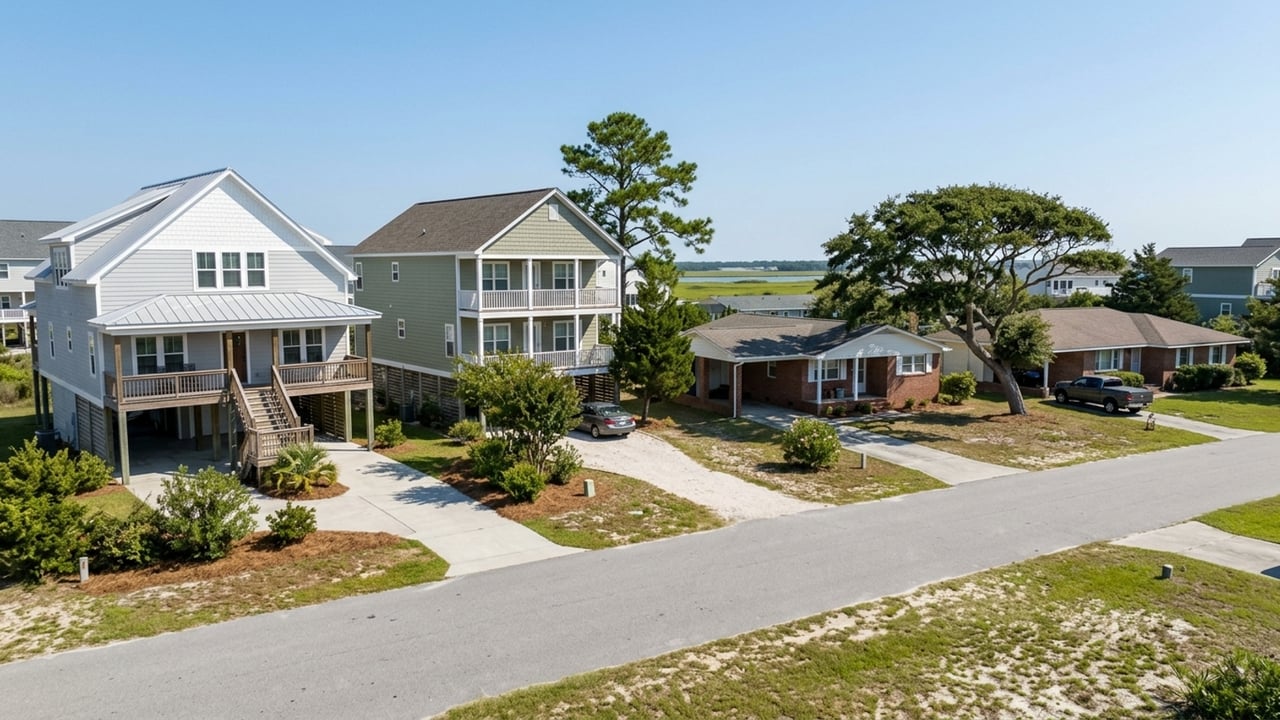
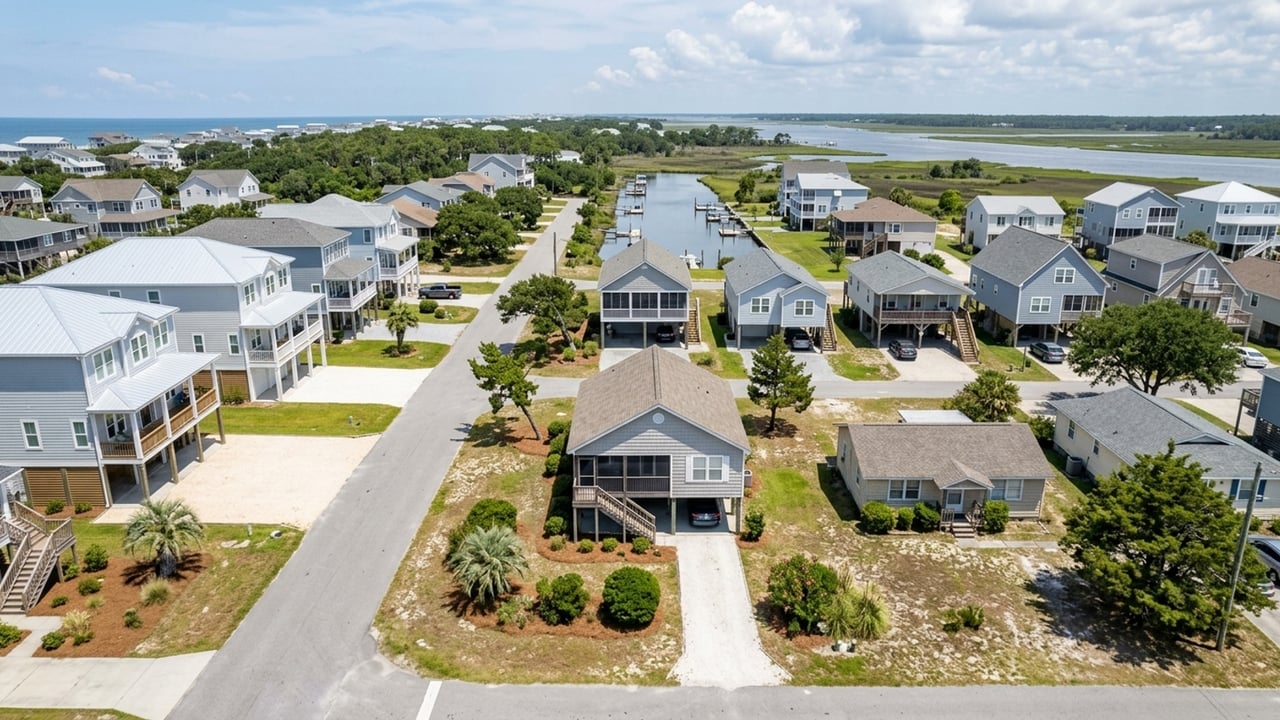
Oak Island is in Brunswick County, North Carolina, where master-planned communities are common. The county runs the full spectrum - low-fee subdivisions on one end, high-amenity resorts on the other.
The North Carolina average sits between $200 and $300 per month, but coastal Brunswick County properties regularly exceed that. Coastal wind and hail insurance is the primary driver pushing the local average above the statewide baseline.
Single-family homes on Oak Island generally have the lowest association fees, often landing near the $60 monthly mark if the neighborhood only maintains a few entrance signs. You're paying less because you're maintaining your own roof and siding.
Condominiums sit at the other end of the range - often $510 to $975 per month. Those dues are replacing individual maintenance and insurance costs that a single-family homeowner pays separately. It's a different ownership structure, not simply a higher price for the same thing.
A high monthly fee isn't automatically a problem if it covers substantial services. The question is whether the dues are connected to the reality of the neighborhood.
Reviewing the association's financial documents is the most direct way to answer that question. It also helps you avoid buying into a community that's been mismanaged for years.
If a neighborhood charges high monthly dues but the common areas look neglected, that's a mismatch worth taking seriously. Peeling paint on the clubhouse, cracked tennis courts - those are signs your money isn't making it to maintenance.
A high delinquency rate is another flag. When a significant number of residents aren't paying their dues, the association typically makes up the gap by raising fees on whoever is still paying. That's a cycle that tends to get worse, not better.
Put the monthly cost next to the services you receive. A $300 monthly fee makes sense if it includes lawn care, internet, and a large community pool.
That same $300 fee is harder to justify if the neighborhood offers a small retention pond and a few streetlights. List out the included services and estimate what you'd pay for them independently - the math usually tells you what you need to know.
Find out when the association last raised its dues and by how much. Consistent, modest annual increases are normal. A sudden large jump is a sign that whoever was running the budget wasn't planning ahead.
Ask for the minutes from recent board meetings too. Those notes often surface ongoing disputes, expensive upcoming repairs, or plans to increase monthly assessments - the kind of information that doesn't show up in a listing description.
The recurring dues are just one part of what you'll owe as an HOA member. There are also one-time charges that show up during closing and throughout ownership, and they catch buyers off guard more often than they should.
Your settlement statement will detail exactly what's owed to the management company before you get the keys. Knowing about these costs in advance makes that closing table a lot less stressful.
When a property changes hands, the management company charges an administrative fee to update their records and transfer the account to the new owner. In North Carolina, the buyer or the seller can pay this fee - it comes down to how the contract is negotiated.
The specific amount is set by the management company, not state law. Request the fee schedule during due diligence so you know the exact cost before you're sitting at the closing table.
Many communities charge a one-time capital contribution fee to new buyers at closing. That payment goes directly into the association's reserve fund to shore up their long-term savings.
It's essentially your entry fee for using infrastructure that existing owners have been funding. The upfront cost ensures the neighborhood has immediate funds available for the maintenance you'll start benefiting from on day one.
A special assessment is a one-time charge levied on homeowners to pay for an unexpected expense the reserve fund can't cover. Major repairs - a damaged roof, a broken community dock - are the typical triggers.
Coastal properties carry a higher risk of special assessments than inland communities. If a storm damages shared amenities, the association may issue an assessment to cover the insurance deductible. It's not a matter of if that risk exists here; it's a matter of whether the community is financially prepared to handle it.
Fees for Oak Island and Southport area homes typically range from $60 to $700 per month. Oceanfront condominium buildings often run higher - roughly $510 to $975 per month. The exact amount depends on the community's amenities and shared maintenance burdens.
It depends on the specific neighborhood and property type. Condominiums and high-amenity communities usually bill monthly, while single-family subdivisions with fewer shared expenses often bill quarterly or annually.
A monthly fee is a mandatory recurring payment that funds upkeep of a community's shared spaces. In Oak Island, that typically covers landscaping, pool maintenance, master insurance policies for condos, and contributions to a reserve fund for future repairs.
A fee is too high if it exceeds the value of the amenities provided or if the community's common areas appear neglected despite the high cost. Comparing dues against the North Carolina average of $200 to $300 per month is a reasonable starting point, keeping in mind that coastal condos naturally cost more.
The specific amount is set by individual property management companies, not by state law. Ask your real estate agent to request the association's fee schedule during the due diligence period to confirm the exact administrative cost.
Yes. Associations can levy special assessments if storm damage exceeds their reserve funds or insurance coverage. This often happens when a community needs to cover a large master insurance deductible after a hurricane.
Stay up to date on the latest real estate trends.

With 39 closed transactions and a deep understanding of coastal investment properties, Marc Stollings provides fact-based guidance as the best real estate agent in Oak… Read more
Partner with a trusted local expert to navigate the Oak Island real estate market with confidence, personalized service, and proven results.