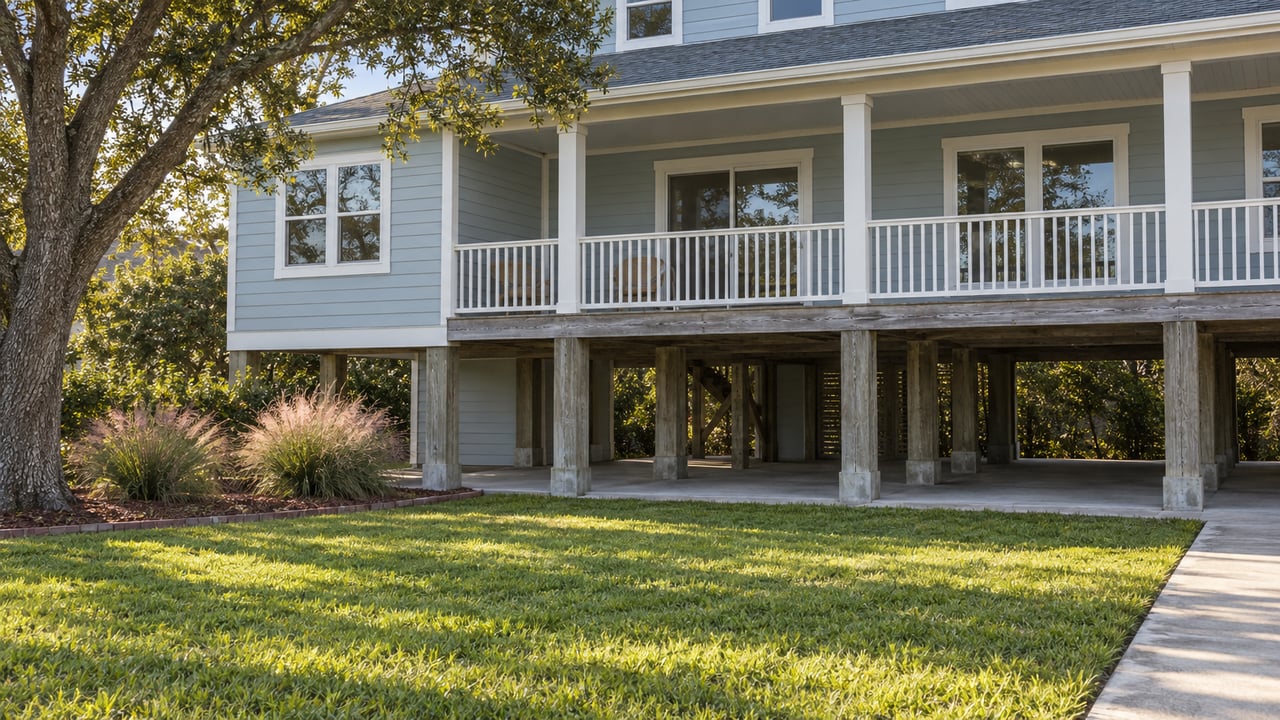
Who Pays to Keep an Oak Island Canal Deep? The Little Davis Canal Question
October 22, 2026
October 22, 2026
When the tide goes out on Little Davis Canal, it leaves sediment behind. One owner along the canal described it to Council in March 2025 as an everyday thing. He said storms aren't the cause and that more seems to build up each year. That report came from The State Port Pilot.
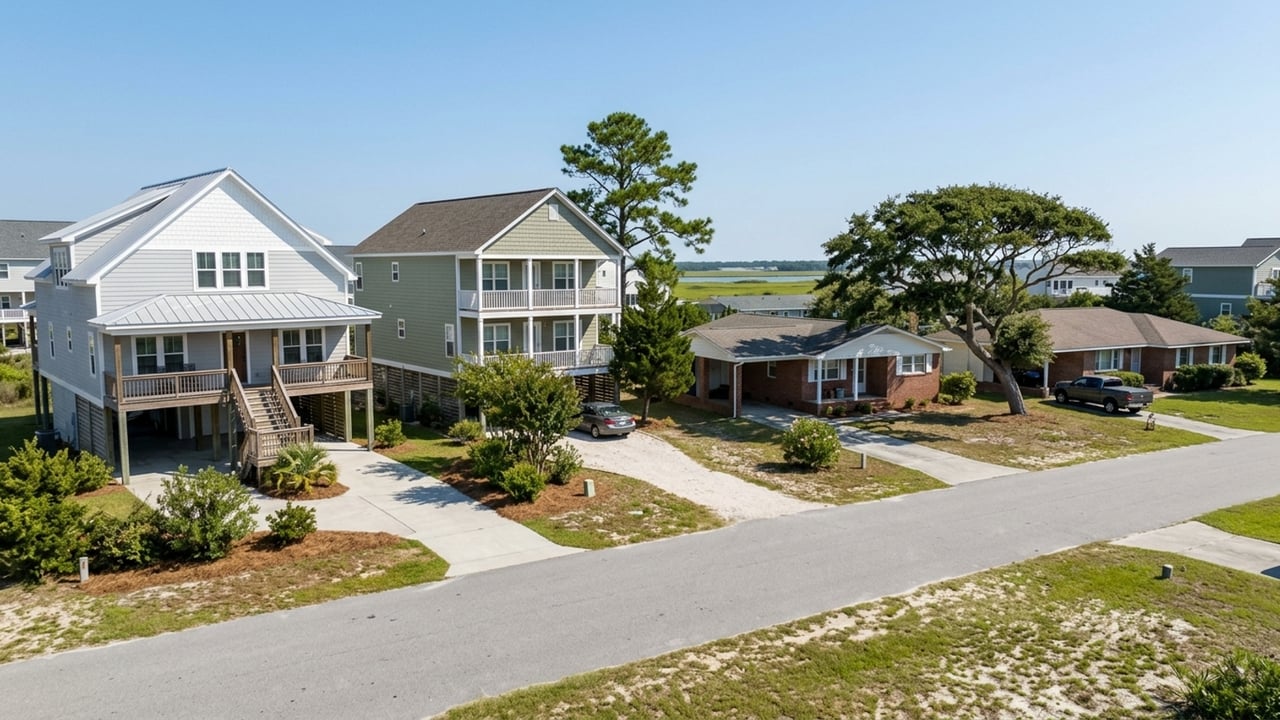
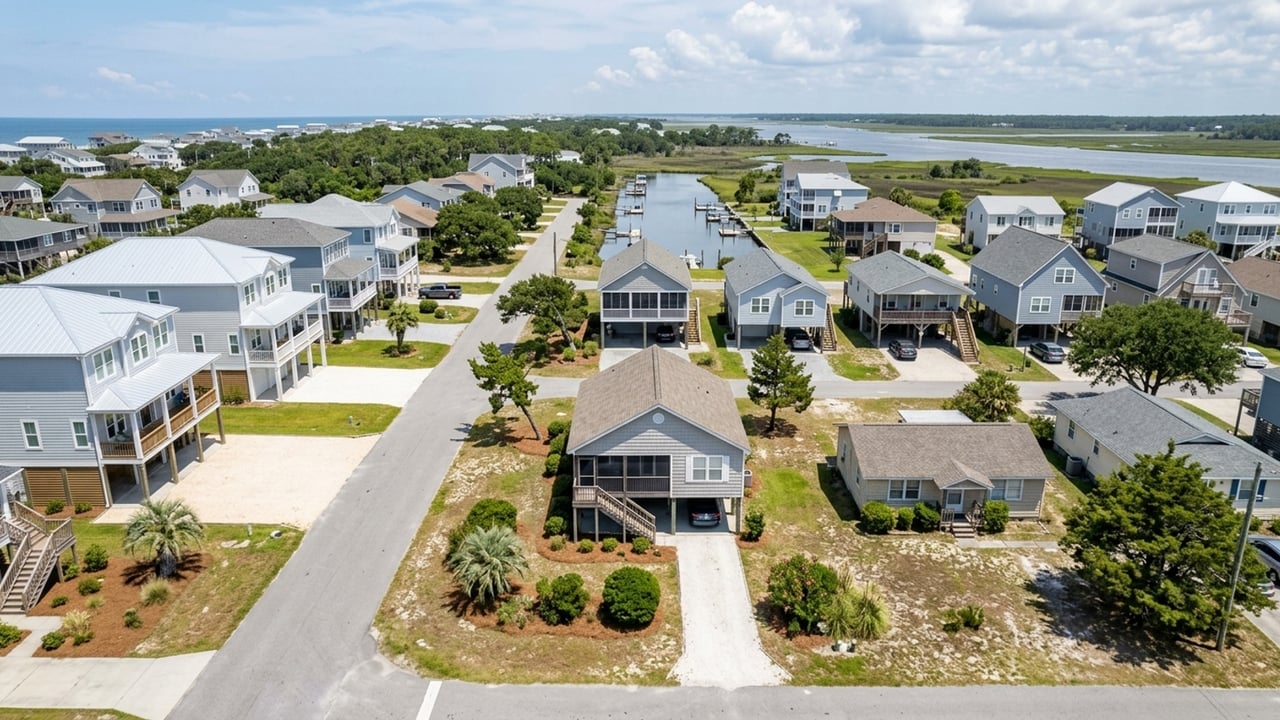
That build-up is the main thing a buyer needs to understand about a canal-front home on this stretch of Oak Island. The canal runs alongside Davis Canal from SW 25th Street to Yacht Drive. Its owners asked the Town to study dredging it. The rough cost now on the record is $2 million. No savings fund exists for it, and the Town has not decided who would pay. A listing that says "boat access" here is describing a depth that someone still has to pay to keep.
The Town of Oak Island hired WSP Global for an $80,000 feasibility study covering SW 25th Street to W Yacht Drive. Survey crews started measuring the bottom of Little Davis Canal on May 14, 2026. By June, the in-water surveys were finished and the Town was waiting on more water and sediment analysis to decide whether future dredging is viable. The Town Projects page gives fall 2026 as the estimated completion date, but the page was last updated in July.
Even before the study was finished, the cost question came up at the August 18, 2026 Town Council meeting. Interim Town Manager Kent Jackson said a dredging project for the canal would cost an estimated $2 million. Councilman Bob Ciullo said that came to roughly $30,000 per home. Councilman Terri Cartner said about 65 properties are affected. She also pointed to SW 15th Street at Little Pine Island as another spot that needs attention and said she did not want the Town doing work for some taxpayers and not others. Mayor Pro Tempore Bill Craft confirmed that the property owners had requested the study and that any further action would need Council deliberation.
The October 13 Council agenda did not include a canal item. So as of this week, Oak Island has a cost estimate and a study in progress, but no adopted funding method.
The petition that started all this was put together carefully. According to The State Port Pilot's report, 52 of the 65 owners on the canal signed it, or four in five. It asked for a special tax and dredging district for properties next to the canal or with direct access to it. Each owner's share would be capped at $500 a year. The dredging plan was narrow: remove about three feet of sediment from the middle third of the canal, out to the CAMA non-encroachment area, so it wouldn't damage owners' docks.
The district was there so the canal could qualify for state money. The petition was counting on a state-administered navigation grant that could cover up to 75% of a first phase. The presenter told Council that not getting it would be a "deal killer."
The middle-third plan is shaped by the grant rules, not just by worry about docks. The state program is the Shallow Draft Navigation Channel Dredging and Aquatic Weed Fund, set up under G.S. 143-215.73F. Its FY 2024-2025 program guidelines from NC DEQ say projects must be primarily for general or recreational navigation. They also say that dredging around piers and docks, or for access to private docks, is not eligible. Only units of local government can apply. The state pays no more than three dollars for every one dollar of non-state money.
So the state can help keep the channel down the middle of the canal open. The state fund will not pay to deepen the water between that channel and a homeowner's dock.
Here is what the publicly reported numbers add up to. These are calculations, not forecasts. The feasibility study has not published depths or a recommendation, and the $2 million is an early estimate.
| Scenario, using reported figures | Total to fund locally | Per property, about 65 properties | Years to raise at $500 per property per year |
|---|---|---|---|
| Owners fund the full $2 million estimate | $2,000,000 | about $30,800 | about 62 |
| State covers 75%, owners fund the rest | $500,000 | about $7,700 | about 15 |
| Petition cap only, no project yet | $32,500 per year | $500 per year | ongoing |
The first row shows why the $500 cap and the $2 million estimate don't fit together without a grant. At $500 a property, the canal raises $32,500 a year. Paying for the full estimate at that rate would take longer than most people own a home. Even with the full state share, the $500 cap would need about fifteen years to cover what's left, unless the money were borrowed up front or the cap changed. Neither has been proposed.
A home bought on Little Davis Canal today comes with an open question about that bill.
Holden Beach shows the other way to handle it. The town keeps separate dredge funds for three canal areas, and the owners there pay in every year. The Holden Beach FY 2026-27 budget report, dated October 7, 2026, lists these budgeted figures.
| FY 2026-27 budget line | Holden Beach Harbor, Fund 61 | Heritage Harbor, Fund 62 | Harbor Acres, Fund 63 |
|---|---|---|---|
| Budgeted owner assessments | $140,070 | $137,293 | $113,743 |
| Balance carried forward | $2,094,064 | not listed above | not listed above |
| Budgeted construction | $1,652,474 | not listed above | not listed above |
The Holden Beach Harbor fund already holds more than $2 million before this year's dredging begins. That is about the same as Oak Island's entire estimate for Little Davis Canal, and Holden Beach owners built it up ahead of time. The same budget sets aside money for surveying, CAMA and other agency permits, design, contract documents, construction management, and legal fees. A canal fund pays for all of that on top of the dredge itself.
This setup is not new. In 2017, the StarNews reported that Holden Beach canal-front owners had been paying yearly maintenance fees. The state grant covered two-thirds of a project of about $2.2 million, and owners paid the rest through assessments.
A Holden Beach canal owner has been paying the dredging cost all along through annual assessments, so it already shows up in the cost of owning there. On Little Davis Canal, that cost hasn't been assigned yet, so it doesn't show up in the price. Two canal homes with similar asking prices can carry very different future costs depending on which of these setups is behind them.
The disagreement on Oak Island is real, and each position has a reason behind it. Some owners who didn't sign the petition said the Town should pay, or that they didn't want an assessment. Three said they already reach deep water through Davis Canal.
During public comment in 2026, according to Council minutes, one resident argued that the canals belong with the Town's core infrastructure because they affect stormwater flow, flooding, and wildlife habitat. A longtime canal-front owner asked for careful dredging. He said the canal was dug to only 14 feet and that going too deep could damage bulkheads. Another resident spoke against the study because he expected a tax increase that would mostly help a few waterfront owners.
Councilman Cartner's mention of Little Pine Island in August adds one more issue. If the Town pays for one canal, other shallow spots on the island have a fair argument for the same treatment.
North Carolina law does let towns create service districts. G.S. 160A-536(a)(5) lists "water resources development projects" among the purposes a district can pay for. How any of that would apply to a particular canal is a question for the Town and for your own advisors. This post is general information, not legal, tax or financial advice, so check your own situation with an attorney or tax professional before you rely on it.
Has Oak Island approved dredging Little Davis Canal? No. The Town commissioned a feasibility study. At the August 18, 2026 meeting, the Mayor Pro Tempore confirmed that any further action would need Council deliberation.
Is there an assessment on these properties right now? Owners proposed a district with a $500 annual cap in March 2025. That proposal has not been adopted.
Would a state grant pay to dredge out to my dock? State program guidelines say dredging for access to private docks is not eligible. The fund is meant for general or recreational navigation.
If you're comparing canal homes on Oak Island and want to see how the depth, the bulkhead, and the unsettled dredging cost on Little Davis Canal affect a fair price, Marc Stollings can help you check the Town's latest record on the canal before you make an offer. Let's Connect.
Stay up to date on the latest real estate trends.

With 39 closed transactions and a deep understanding of coastal investment properties, Marc Stollings provides fact-based guidance as the best real estate agent in Oak… Read more
Partner with a trusted local expert to navigate the Oak Island real estate market with confidence, personalized service, and proven results.