The Green Edging on Oak Island: What Hatch Season Actually Looks Like from the Porch
July 23, 2026
July 23, 2026
If you walk East Beach at 6:45 on a July morning, you will probably pass a pair of people in badged shirts moving slowly, reading the sand the way other people read a newspaper. They are looking for a set of parallel flipper tracks that came out of the surf overnight, arced up toward the dunes, and returned. That is the front end of Oak Island's summer. The back end, the part that runs from mid-July into October, is quieter, happens mostly at night, and reshapes how a lot of residents use their own porches.
Hatch season is not really a wildlife attraction on Oak Island. It is a rolling, unpredictable civic operation with a hotline, a permit number, and roughly 200 volunteers who have signed up to sit in the dark next to a plastic runway made of landscape edging.
The Oak Island Sea Turtle Protection Program, known locally as OISTPP, has been running since 1989, which makes 2026 its 37th season. The patrol team covers the roughly 10.5 miles of beach from Martin Street on East Beach out to The Point. Caswell Beach Turtle Watch handles everything east of the Oak Island Pier.
The season has two clocks running at once. Nesting starts around May 1 and typically closes by mid-August, with a female laying about 100 to 120 eggs per nest, each the size of a ping pong ball. Then a second clock starts on each nest. Roughly 50 days after a nest is laid, a Nest Parent begins a nightly vigil. Nests laid in shade or early cool weather can take up to 100 days. Because Oak Island often records the first nest in the state, the earliest hatchings tend to land in the first half of July. The last ones can push into October.
That is the mechanical answer to why July feels different here, even if you have lived on the island for years. The nesting window is closing and the hatching window is opening, and both are running on the same strip of sand at the same time.
If you walk past a marked nest and notice green landscape edging arranged in a shallow chute toward the water, that nest is inside its emergence window. A Nest Parent is either sitting with it or coming back for a shift after dark. Volunteers wear a program badge; if someone at a nest cannot show one, they are not with OISTPP.
The behavior rules the program asks for are unusually specific because the failure modes are specific:
Harassing a sea turtle is a federal offense under the Endangered Species Act, and NCWRC keeps a violations hotline at 1-800-662-7137. That is not a rhetorical detail. OISTPP volunteers have logged false crawls this season where the tracks show a mother turned back with human footprints right beside her path.
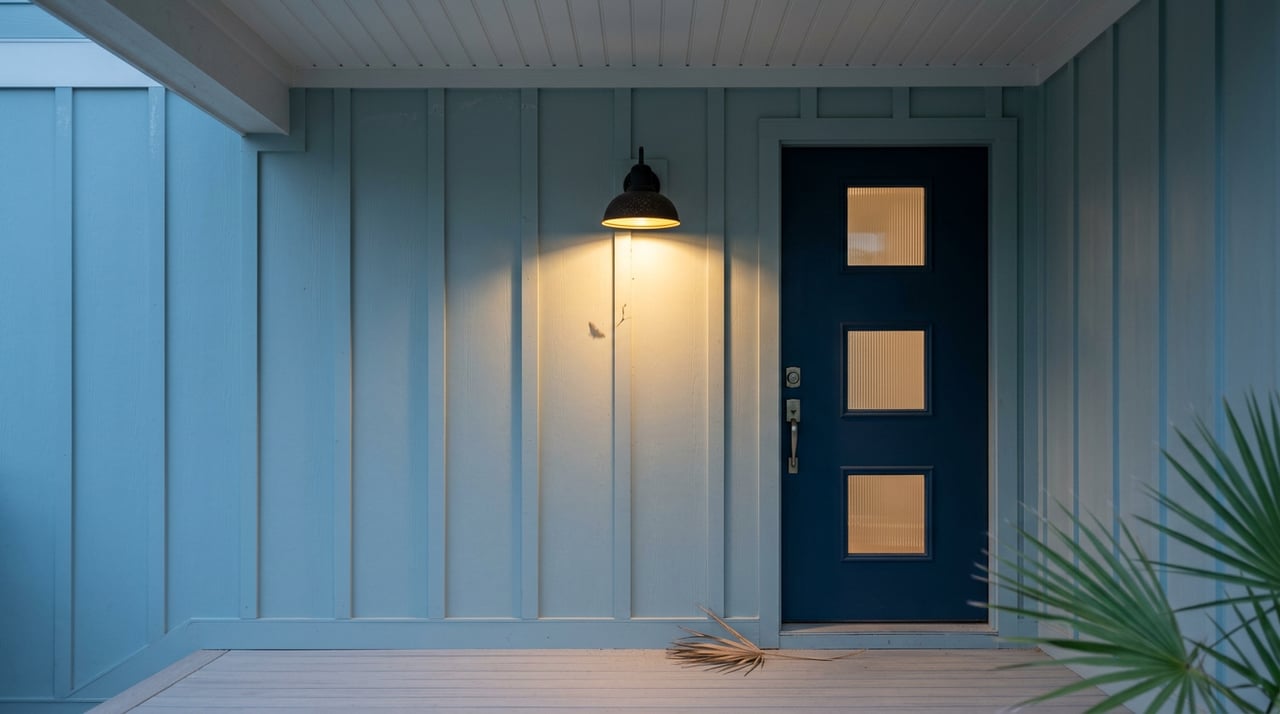
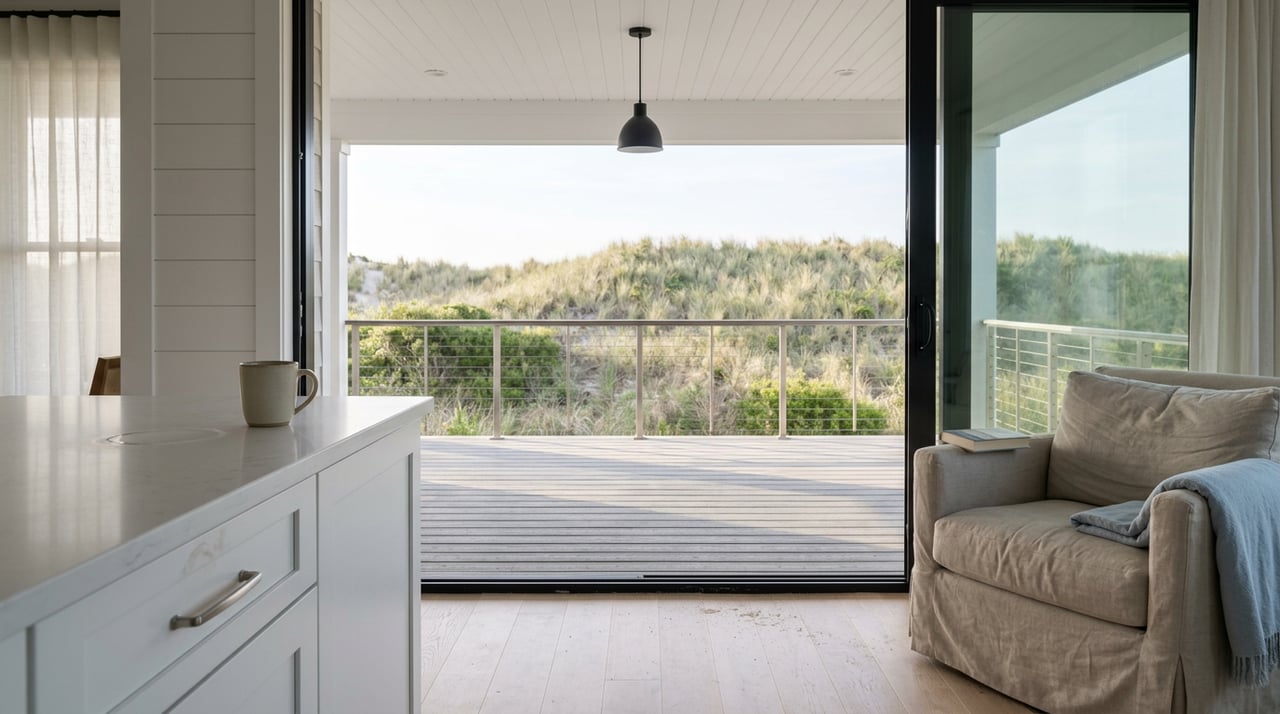
The single biggest way a homeowner can help or hurt a hatch is the lighting decision they made when they last replaced a fixture. Hatchlings navigate to the water by the brightest horizon they can see, and a kitchen pendant visible through an unshaded slider or an uplit palm at the base of the drive can pull a boil of 90 hatchlings straight into the dunes instead of the Atlantic.
The workable answers are well established at this point. Long-wavelength bulbs at 560 nanometers or greater, which reads to the eye as amber, orange, or red. Fixtures mounted low, shielded, and pointed down and away from the beach. Blackout curtains or heavy drapes for anything oceanfront on the interior side of the glass. Decorative uplighting turned off for the season. The Oak Island Pier itself already uses wildlife-friendly lighting, and the coastal fixture market has moved in that direction, so an amber A19 swap-out is not the retrofit project it used to be.
Turn off all outside lights each night. Also if there are curtains or blinds use them so your indoor lights do not lead the hatchlings away from the ocean.
That line is on the OISTPP guidance page. It is worth taking literally, because the interior lights are often the ones people forget.
| Window | What is happening | Where residents intersect |
|---|---|---|
| May 1 – mid-August | Nesting; mother turtles laying up to 100–120 eggs per nest | Morning patrols read tracks; nests marked and staked |
| ~50 days after each nest | Nest Parents begin nightly vigils; green edging installed | Neighbors adjust exterior lights, curtains close after dusk |
| July – October | Hatchings and "boils" occur, usually at night | Passers-by welcome to sit quietly at nests with volunteers |
| ~3 days after each hatch | Nest excavation and inventory | Public can watch daytime excavations |
| Year-round | Cold-stun and stranding response | Public calls 910-945-8888 or 252-241-7367 |
The reason OISTPP works at the scale it does is that it has knitted itself into places you were already going. The Monday Farmers and Artisans' Market at Middleton Park, running 8 to 1 from June 1 through August 31, is a regular outreach stop. Turtle Talks run weekly through the summer. Earth Day gets a booth.
The fundraising side has quietly moved into the local restaurant calendar too. In February, Lazy Turtle Bar and Grill hosted its first polar plunge for OISTPP, with general manager Giovanni Masucci leading the group into the surf in a green turtle costume. The event cleared its goals and helped the program prepare for the 2026 season. Coordinator Suzan Bell has been open about needing that kind of support to keep an all-volunteer operation running year-round, because turtles show up cold-stunned in the winter too, and someone has to be on call.
Save these three numbers before you need them:
Sick or injured turtles that OISTPP recovers are typically transported to the Karen Beasley Sea Turtle Rescue and Rehabilitation Center in Surf City. If you find what looks like a dead turtle in cold weather, do not put it back in the water. Cold-stunned turtles look lifeless and are not.
Oak Island recorded 77 nests in 2025. Spread across roughly 10.5 miles of monitored beach, that averages out to about seven nests per mile, but the actual distribution is uneven and confidential, because NCWRC does not publish exact nest locations for good reasons. What that number does mean, on a practical level, is that most oceanfront blocks on the island had at least one nest incubating within a few hundred feet of their dune walkover for most of the summer. Which is another way of saying that the lighting choice, the curtain choice, and the front-porch flashlight habit are not abstract.
The people who have lived here longest tend to describe hatch season the same way. It is the part of the year when the beach genuinely feels shared with something else, and the reason it stays that way is a fairly small group of people walking the strand at sunrise and sitting with a nest at midnight so the rest of us can keep our routines.
If you are thinking about a coastal home and you want a straight read on what full-time life on Oak Island actually looks like beyond the listing photos, Marc Stollings is happy to talk through it. Let's Connect.
Stay up to date on the latest real estate trends.
Partner with a trusted local expert to navigate the Oak Island real estate market with confidence, personalized service, and proven results.